How Are India and Canada Connected? – Cultural & Historical Ties
Strong historical, cultural, and economic bonds connect India and Canada. The country hosts over 1.4 million people of Indian origin, making it a global hub for the Indian diaspora.This vibrant community plays an integral role in Canadian society, contributing to politics, business, healthcare, arts, and education.Diplomatic relations between India and Canada date back to 1947, the year of India’s independence. The two nations share democratic values, a commitment to multiculturalism, and close people-to-people ties. Indian festivals like Diwali, Vaisakhi, and Holi are celebrated widely across Canadian cities. Indian cuisine is popular throughout the country, reflecting the deep-rooted cultural exchange. Educational partnerships are also strong — thousands of Indian students pursue higher education in Canada each year, further deepening the academic and cultural connections between the two nations.
Interesting Things to Know About Canada Before You Go
Before traveling to Canada, it’s helpful to know a few unique facts. The weather in Canada varies greatly due to its vast size. It experiences four distinct seasons, with winters being extremely cold in provinces like Alberta or Quebec, and summers offering pleasant temperatures in areas like British Columbia and Ontario.
Tipping is customary in Canada, with 15 to 20 percent typically added to restaurant bills and other service charges. Wildlife is another highlight — moose, bears, and even whales can be spotted, especially in national parks and coastal regions. Multiculturalism is a defining feature of Canadian society, and visitors will experience a rich blend of languages, cuisines, and traditions in the country’s major cities. Canada also has two official languages, English and French, with Quebec being primarily French-speaking.
What to Know Before Booking a Canada Tour Package
If you’re planning a trip to Canada, there are a few things to consider before booking your tour package. Indian passport holders are required to obtain a tourist visa, known as the Temporary Resident Visa, to enter Canada. Alternatively, some travelers may qualify for the Electronic Travel Authorization (eTA), depending on their travel history or visa type.
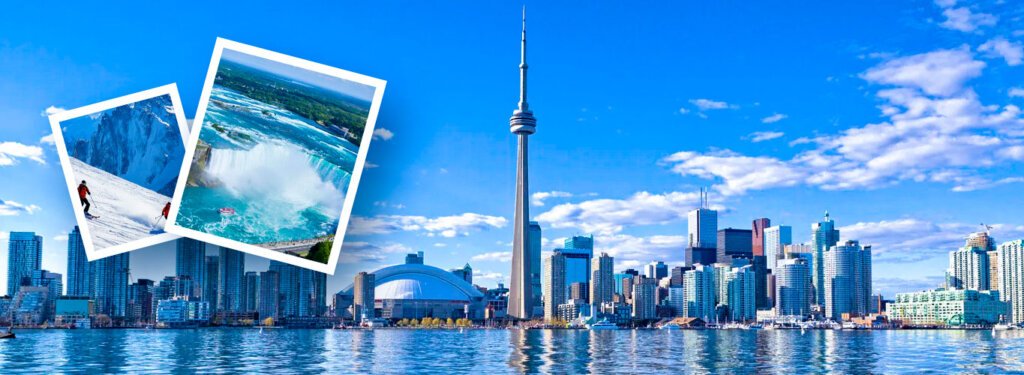
The prime travel season in Canada runs from June to September, when the weather is perfect for exploring and adventure.If you’re interested in snow sports or viewing the Northern Lights,If you enjoy winter activities, December to February is the perfect time to visit. Choosing the right itinerary is essential — whether you’re drawn to city life, natural wonders, wildlife, or cultural heritage, Canada has something for every traveler. Popular destinations include Niagara Falls, the Canadian Rockies, Vancouver, Montreal, and Toronto.
Travel insurance is strongly recommended, as healthcare costs can be high for visitors. Make sure your package includes comprehensive coverage for medical and travel emergencies.The Canadian Dollar (CAD) serves as the official currency of Canada. While credit cards are widely accepted throughout the country, it’s advisable to carry some cash, especially when visiting remote or rural areas.
Which Are the Best Budget Canada Tour Packages?
Traveling to Canada doesn’t have to break the bank. Many budget-friendly Canada tour plan cater to different interests — from city breaks and nature retreats to adventure getaways and cultural explorations. Among the most affordable and popular options is the Eastern Canada Highlights package, which offers a 7-day tour covering Toronto, Ottawa, Montreal, and Quebec City with group transport and budget hotel stays. For nature lovers, the Rockies on a Budget itinerary allows travelers to explore Banff, Jasper, and Lake Louise while staying in hostel-style accommodations and joining guided nature walks.
If you’re looking for a blend of urban charm and natural scenery, the Vancouver City & Nature Escape spans 4–5 days and includes visits to Stanley Park, Capilano Suspension Bridge, and Grouse Mountain. Independent travelers often prefer Self-Drive Tour Packages — affordable and flexible options that cover scenic routes across Nova Scotia, British Columbia, or Alberta. Meanwhile, those chasing the magical aurora borealis can opt for the Northern Lights in Yukon packages, which typically include 2–3 nights of aurora viewing, guided local tours, and comfortable lodge stays. Most of these packages are customizable and include transportation, accommodation, and some meals — helping you make the most of your Canadian journey without overspending.
Quick Facts About Canada – Geography, Wildlife & People
Canada spans six time zones and borders three major oceans: the Atlantic, Pacific, and Arctic. Its vast and varied geography includes towering mountain ranges, pristine lakes, ancient glaciers, dense boreal forests, and expansive coastal plains. This natural diversity offers endless opportunities for outdoor exploration and scenic beauty.
Wildlife lovers will find Canada to be a true sanctuary. From grizzly bears in British Columbia and moose in Newfoundland to polar bears in Manitoba and whales off the coast of Nova Scotia, the country is home to an incredible array of animals. Symbolizing resilience and nature, the beaver stands as a proud emblem of Canada’s wildlife legacy.
The people of Canada are known for their politeness, warmth, and multicultural outlook. With a population of around 40 million, the country embraces cultural diversity, with significant communities from Asia, Europe, Africa, and a proud foundation of Indigenous cultures. Canada celebrates inclusion, tolerance, and the harmony of its varied heritage.